Instructions
- 1
Prepare the Almond Sponge: Preheat oven to 180°C (350°F). Line a baking sheet with parchment paper. In a large bowl, whisk eggs and granulated sugar until pale, thick and tripled in volume, about 5 minutes. Sift flour and salt together, then gently fold in the ground almonds and the flour mixture until just combined. Spread batter evenly into a 20x20 cm (8x8 inch) square on the parchment. Bake for 12-15 minutes until springy to the touch. Cool completely, then cut out a 16 cm (6.3 inch) circle.
- 2
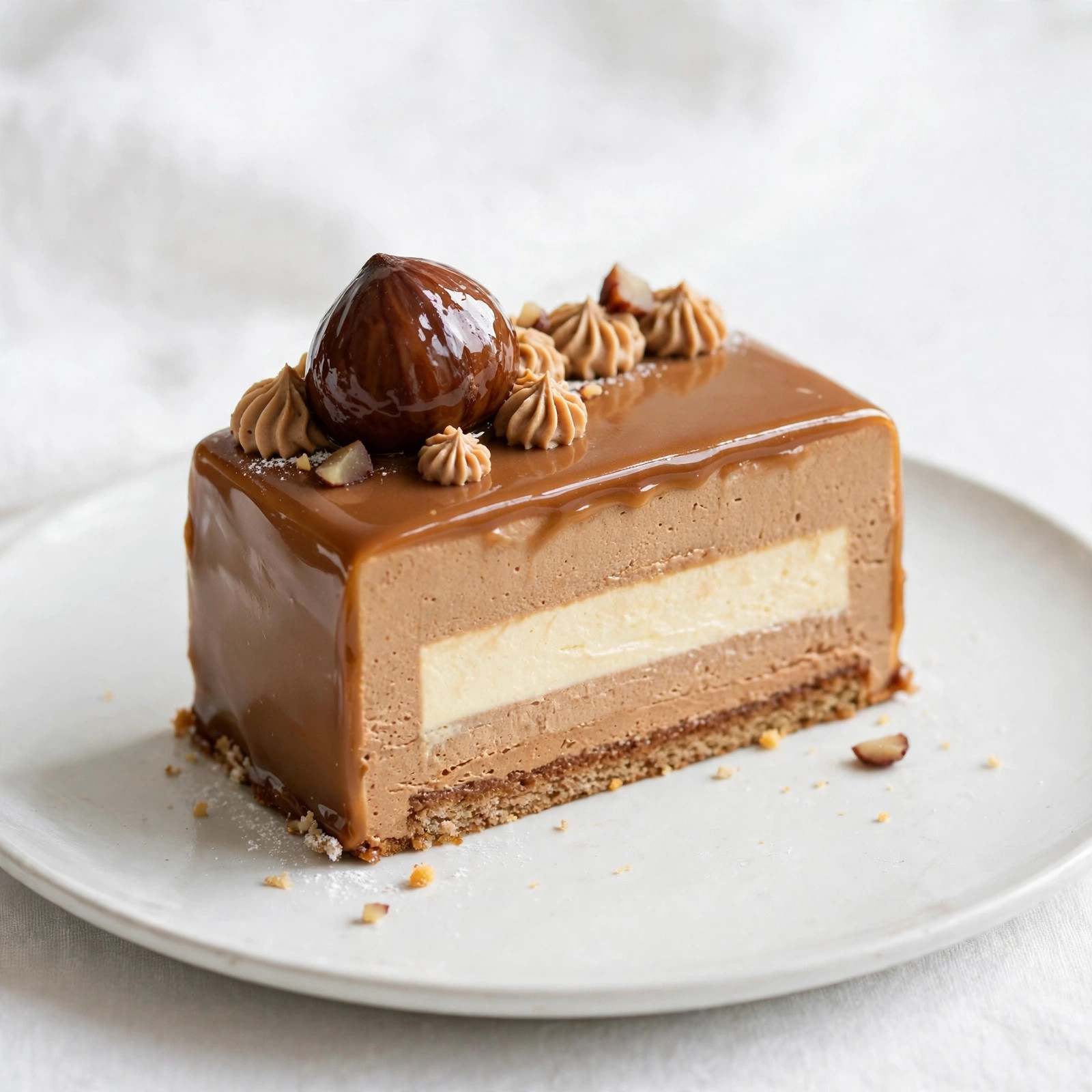
Make the Vanilla Cremeux Insert: Warm the heavy cream with the vanilla bean in a small saucepan until steaming, then let it steep for 10 minutes. Remove the vanilla bean, pour the cream over the chopped white chocolate and let it sit for 2 minutes, then stir until smooth. Whisk in the egg yolks, then stir in the bloomed gelatin until fully dissolved. Pour into a 16 cm (6.3 inch) silicone mold or a round pan lined with plastic wrap, spread flat and freeze for at least 2 hours, or until solid.
- 3
Prepare the Chestnut Mousse Base: Bloom gelatin in cold water for 5 minutes. In a saucepan, warm whole milk until steaming but not boiling. In a bowl, whisk egg yolks with granulated sugar until pale. Slowly pour the warm milk into the yolks, whisking constantly, then return the mixture to the saucepan. Cook over low heat, stirring, until it thickens enough to coat a spoon, about 82°C (180°F). Remove from heat, stir in bloomed gelatin until dissolved, then whisk in the chestnut puree until smooth. Let the base cool to room temperature, about 25-30°C (77-86°F).
- 4
Whip the heavy cream to soft peaks. Gently fold the cooled chestnut base into the whipped cream in two additions, being careful not to deflate the mousse. Ensure it is well combined but still light and airy.
- 5
Assemble the Entremet: Place an 18 cm (7 inch) silicone entremet mold (or a springform pan lined with acetate) on a flat tray. Pour about half of the chestnut mousse into the mold, spreading it up the sides slightly. Carefully place the frozen vanilla cremeux insert in the center. Cover with the remaining mousse, ensuring the insert is fully encased. Gently press the almond sponge circle on top of the mousse layer. Freeze for at least 6-8 hours, preferably overnight, until completely solid.
- 6
Make the Chestnut Mirror Glaze: Bloom gelatin in cold water for 5 minutes. In a saucepan, combine glucose syrup, sweetened condensed milk and 60g (1/4 cup) chestnut puree. Bring to a gentle boil, then remove from heat. Add the chopped white chocolate and bloomed gelatin, stirring until smooth. Use an immersion blender to emulsify, being careful not to incorporate air bubbles (keep the blender head submerged). Strain through a fine-mesh sieve to remove any lumps or bubbles. Let the glaze cool to 32-35°C (90-95°F).
- 7
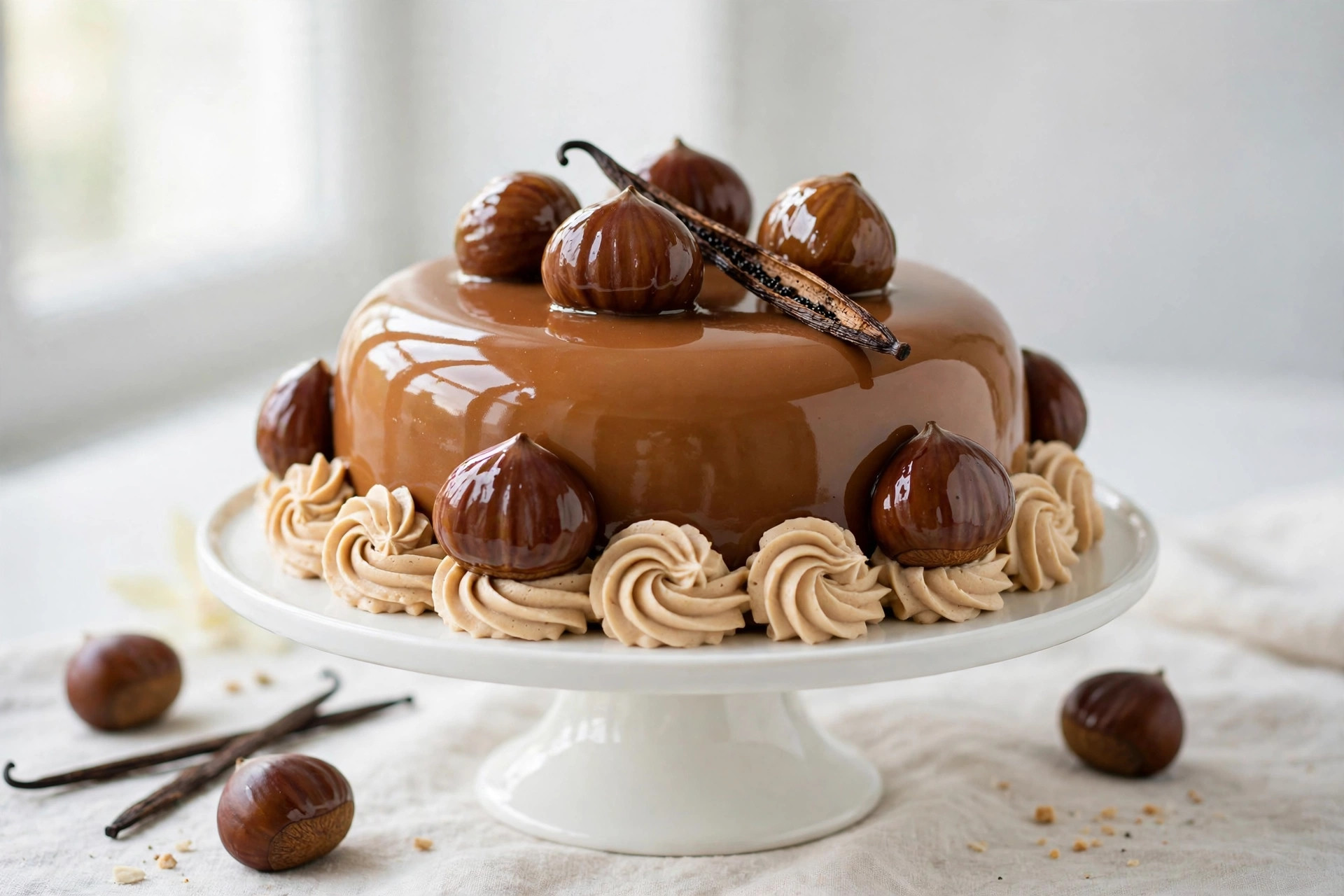
Glaze the Entremet: Unmold the frozen entremet and place it on a wire rack set over a baking sheet (to catch excess glaze). Pour the cooled glaze evenly over the entire frozen entremet, ensuring full coverage. Let excess glaze drip off for a few minutes. Carefully transfer the glazed entremet to a serving plate using two spatulas.
- 8
Chill and Garnish: Refrigerate the entremet for at least 1-2 hours to allow the mousse to thaw slightly and the glaze to set. Garnish with glazed chestnuts, piped chestnut cream and a vanilla pod just before serving. Slice with a hot, dry knife for clean cuts.
Baker's Tip
Use unsweetened chestnut puree, not sweetened chestnut spread: the spread is far too sweet and will make the mousse heavy. For the mirror glaze, temperature is everything: pour at 32-35°C (90-95°F). Too hot and the glaze slides off, too cold and it sets before it spreads. For a visual guide, watch the full tutorial on YouTube: https://www.youtube.com/watch?v=_Cj_En0PdWw
Frequently Asked Questions
Can I make this entremet ahead of time?
Absolutely! Entremets are designed for make-ahead convenience. You can assemble and freeze the entremet for up to 2-3 weeks. Glaze it the day before or on the day of serving, then thaw in the refrigerator for several hours before enjoying.
Can I use canned chestnut puree?
Yes. Canned unsweetened chestnut puree works well and saves the work of peeling and cooking fresh chestnuts. Use the same weight and check the label: it must be 100 percent chestnuts with no added sugar.
What if I do not have an entremet mold?
You can use a springform pan (8 or 9 inch) for the main entremet. Line the sides with acetate strips for a clean finish. For the vanilla cremeux insert, use a smaller springform pan or a round cake pan lined with plastic wrap, ensuring it is at least 1-2 inches smaller than your main mold.
My mirror glaze has bubbles or is not smooth. What went wrong?
Bubbles often occur from whisking vigorously or incorporating air during blending. Use an immersion blender, keeping the head fully submerged and tilted slightly to avoid air. If it is not smooth, it might be too cold or not properly emulsified; gently reheat and re-blend, then cool to the correct temperature.
About This Recipe
This elegant Chestnut Vanilla Entremet layers a soft almond sponge, a silky vanilla cremeux insert and a rich chestnut mousse, all under a glossy caramel chestnut mirror glaze. A showstopping French dessert for any special occasion, with clear steps, pro tips and a video tutorial to guide you.
More Entremets & Mousse