Instructions
- 1
Press graham crust into springform. Bake 8 minutes at 300°F.
- 2
Sift matcha powder twice to remove lumps.
- 3
Beat cream cheese until smooth. Add sugar, cornstarch and matcha. Mix until evenly colored.
- 4
Beat in egg yolks one at a time. Mix in heavy cream.
- 5
In separate bowl, beat egg whites with cream of tartar to stiff peaks.
- 6
Fold egg whites into matcha mixture gently — do not deflate.
- 7
Pour into springform. Bake in water bath at 300°F for 60-65 minutes.
- 8
Cool in oven 2 hours. Refrigerate overnight. Dust with matcha before serving.
Baker's Tip
Sift the matcha powder at least twice — matcha clumps are bitter and harsh against the delicate cream cheese flavor. Lumpy matcha ruins both the flavor and the visual even green color. Use ceremonial grade matcha for best color and taste.
Frequently Asked Questions
What is the difference between ceremonial and culinary matcha?
Ceremonial grade matcha is the highest quality — bright green, sweet and floral, intended for drinking. Culinary grade is more bitter, darker and less expensive. For cheesecake, ceremonial or premium culinary matcha gives the best flavor and color.
Why does my matcha cheesecake have a yellow-green color instead of vibrant green?
The matcha quality is low or it has oxidized from improper storage. Store matcha sealed airtight in the freezer. Good fresh matcha should be bright emerald green. Pale or yellow-green matcha is stale and will taste grassy and bitter.
My cheesecake deflated after cooling — is that normal?
Some sinking is normal for the souffle-style Japanese cheesecake. It comes from the egg whites and is expected. The cheesecake should be 2-3cm thinner after cooling than when it came out. This is correct — it means you folded the whites correctly and achieved the right airy texture.
Can I make matcha cheesecake without eggs?
For a no-bake version, omit the eggs entirely and use 4 gelatin sheets for structure, increase cream cheese to 600g and fold in 2 cups whipped cream. You will not get the souffle texture but the flavor is equally good.
About This Recipe
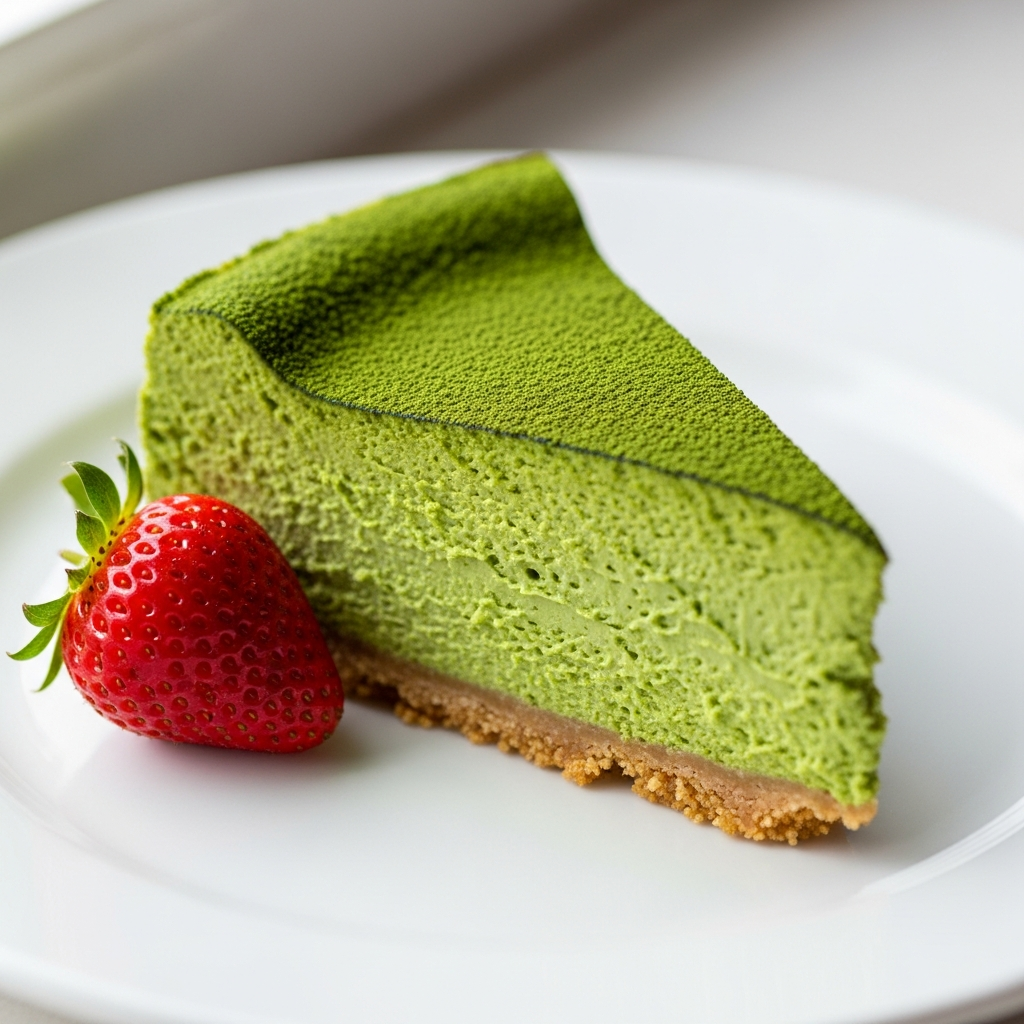
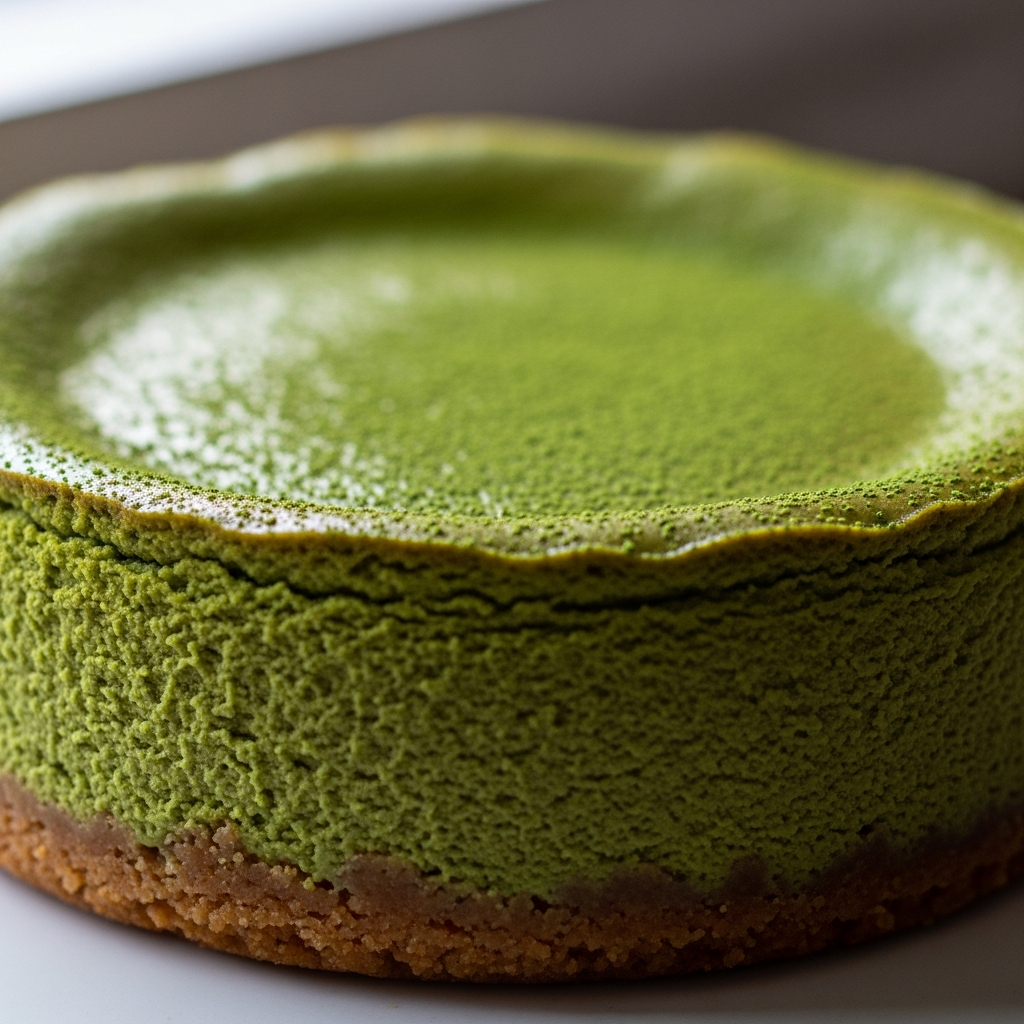
A delicate Japanese-style baked matcha cheesecake — light, cloud-soft texture with an earthy green tea flavor balanced by the sweetness of cream cheese. Dusted with premium matcha powder and served with fresh strawberries, it is as visually stunning as it is subtly flavored.
More Cheesecakes